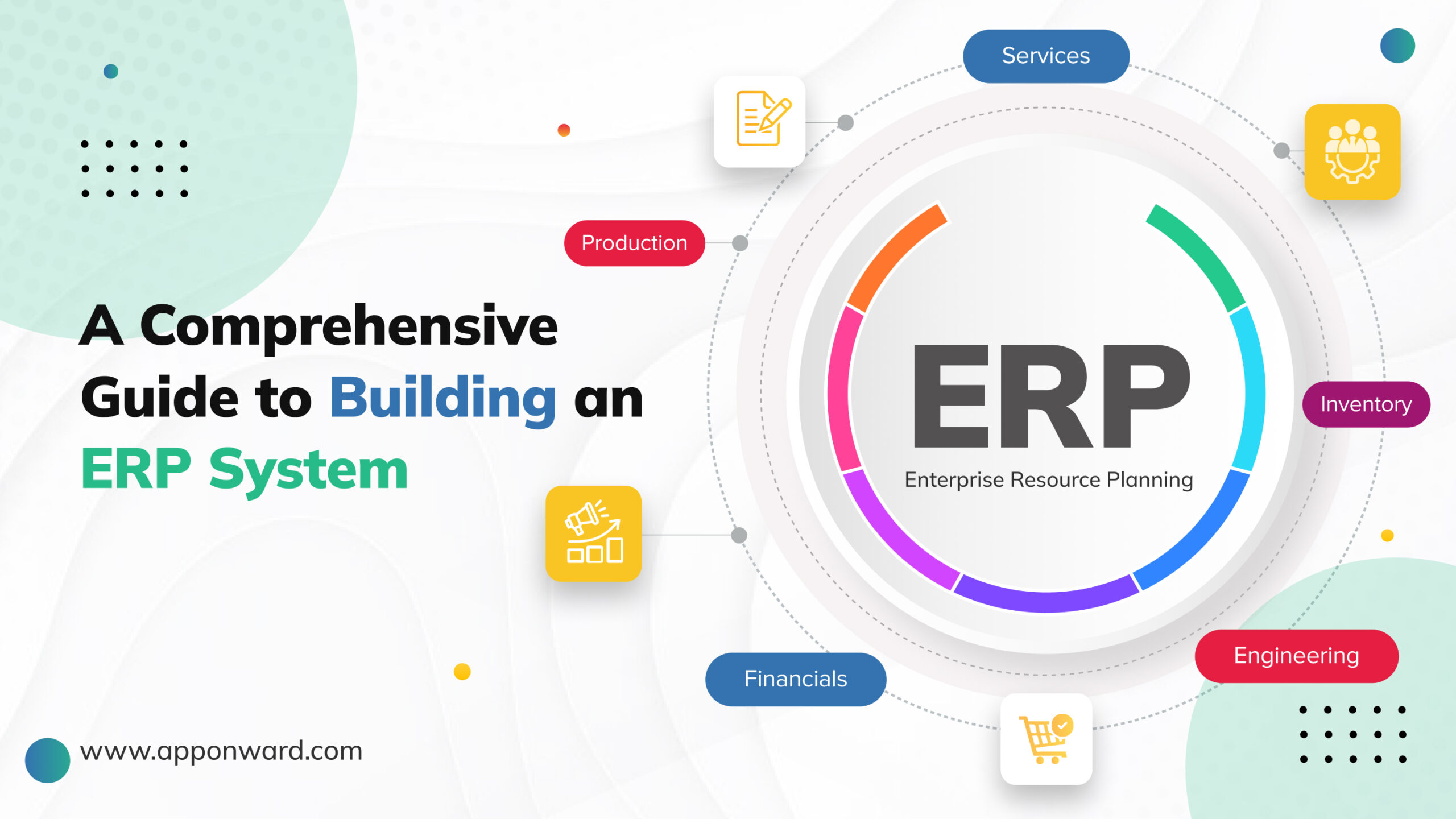
Growing companies eventually reach a point where spreadsheets no longer cut it. That’s where Parc Technologies Applications enterprise resource planning software comes in: ERP systems collect and organize key business information and help organizations run lean, efficient operations, even as they expand. Most business professionals have heard the term “ERP,” but they may not know exactly what enterprise resource planning systems can do for their teams.
What Is Enterprise Resource Planning (ERP)?
ERP is a category of business software that automates business processes and provides insights and internal controls, drawing on a central database that collects inputs from departments including accounting, manufacturing, supply chain management, sales, marketing and human resources (HR).
Every business has multiple stakeholders collaborating to make things work. However, it becomes challenging when critical information is scattered across disconnected systems. For example, the accounting and FP&A teams could each have different spreadsheets with different figures for expense tracking.
ERP systems centralize data, provide cross-departmental visibility, enable efficient analysis, resolve data conflicts, and drive process improvements. That translates to cost savings and better productivity as people spend less time digging for needed data.
ERP is critical business software that collects information from various departments in a common database, enabling leaders to monitor the pulse of a company using a single vision of reality.
ERP systems unify critical business functions like finance, manufacturing, inventory and order management, customer communication, sales and marketing, project management and human resources. One major feature is detailed analytics and reporting on each department.
ERP can generate major time and financial savings by providing organization-wide visibility that spotlights inefficient manual processes and reveals growth opportunities.
There are several deployment models for ERP software, including on-premises, cloud and hybrid. While cloud ERP has become extremely popular in recent years, the best approach for any given company depends on its needs.
Businesses should ensure they understand the capabilities, implementation models, integration requirements and total cost of ownership of a short list of software providers before picking a winner.
ERP Explained
Enterprise resource planning — a moniker coined by Gartner in 1990 — can be confusing because ERP is not a standalone application. ERP is a category of business software, and ERP systems comprise various modules, each addressing a specific business requirement.
For example, products-based companies typically have modules for accounting, inventory and order management, customer relationship management (CRM) and, if they produce or assemble products, manufacturing. Services businesses may turn to modules for accounting, project management, professional services automation, and CRM.
 Site Title
Leave a comment